- Best fit
- Console
- Setup effort
- Low
- Flexibility
- Medium
The couch player
Plays on a TV, often with family or friends in the room. Local multiplayer and simple setup matter more than frame rates.
Gallery three
The oldest debate in gaming, reframed as a practical decision: what you pay, what you can play and how much tinkering you want.
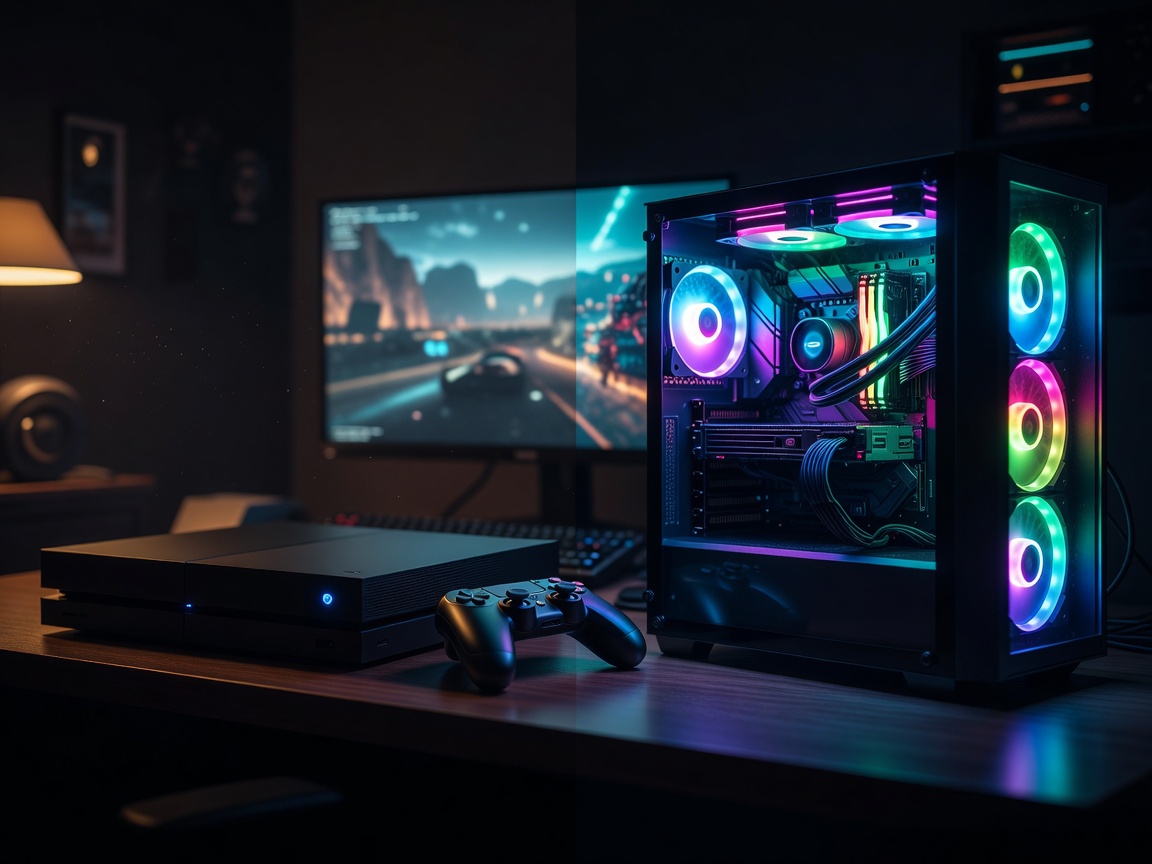
Consoles and PCs have competed since the 1980s, when home computers ran games alongside spreadsheets. In the 1990s PC gaming led in first-person shooters and strategy, with Doom, Quake and StarCraft building online communities, while consoles owned the living room. Since the PS4 and Xbox One adopted x86 processors, the two platforms have shared more technology than ever. The question now is less about which is “better” and more about which trade-offs suit you.
General patterns only. Individual platforms, regions and offers vary, so check current details before you buy.
| Criterion | Console | PC |
|---|---|---|
| Upfront cost | One fixed price for a tuned, complete system | Wide range, from modest builds to very expensive high-end rigs |
| Game prices & sales | Regular store sales; physical discs can be resold | Frequent, deep digital sales across several storefronts |
| Online multiplayer | Usually requires a subscription (PlayStation Plus, Xbox Game Pass, Nintendo Switch Online); many free-to-play games excepted | Generally free |
| Upgrades | Storage expansion; otherwise wait for a new model | Replace the GPU, CPU, memory or storage piece by piece |
| Exclusives | Nintendo first-party games remain console-only | Many PC-first strategy, simulation and indie titles; more console games now arrive later |
| Backward compatibility | Varies by platform; Xbox has broad support for older games | Decades of software, though very old titles may need fixes |
| Mods & customisation | Limited and curated | Extensive community mods for many games |
| Setup & maintenance | Plug in and play; updates are automatic | Drivers, settings and occasional troubleshooting |
| Input & display | Built for controllers and TVs | Keyboard, mouse, controllers, high-refresh monitors or TVs |
Compare the whole lifetime of the system, not just the box price. For a console, add the online subscription over several years, any extra controllers and a storage expansion if you play large games. For a PC, add a monitor, keyboard and mouse if you do not own them, plus possible component upgrades. PC players often save on game purchases through frequent sales and free online play, which can offset a higher starting price over time. Because component and console prices change often, compare current listings from reputable retailers rather than relying on older figures.
Four common player profiles and where they tend to land.
Plays on a TV, often with family or friends in the room. Local multiplayer and simple setup matter more than frame rates.
Plays shooters or strategy seriously. PC dominates esports such as Counter-Strike, League of Legends and Dota 2, thanks to mouse aiming and high-refresh displays.
Enjoys mods, custom settings and building hardware. The PC is as much a hobby as the games themselves.
Follows specific series. Choose the platform where those games launch first; for Nintendo series, that means Nintendo hardware.
Microsoft now releases many first-party games on Windows as well as Xbox, and Xbox Play Anywhere links purchases across both. Sony has brought a growing list of PlayStation games to PC, including God of War and Horizon Zero Dawn, usually some time after their console debut. The Steam Deck and other PC handhelds make PC gaming portable, and cloud services such as Xbox Cloud Gaming and GeForce NOW stream games to devices that could never run them locally. Cross-play in games like Fortnite and Rocket League means your friends can join regardless of platform.
Meet the series that outlived the hardware they launched on.
Franchises & Remakes