- Launch
- 1980
- Maker
- Nintendo
- Big idea
- D-pad
Game & Watch
Single-game LCD devices; later models introduced the cross D-pad.
Gallery two
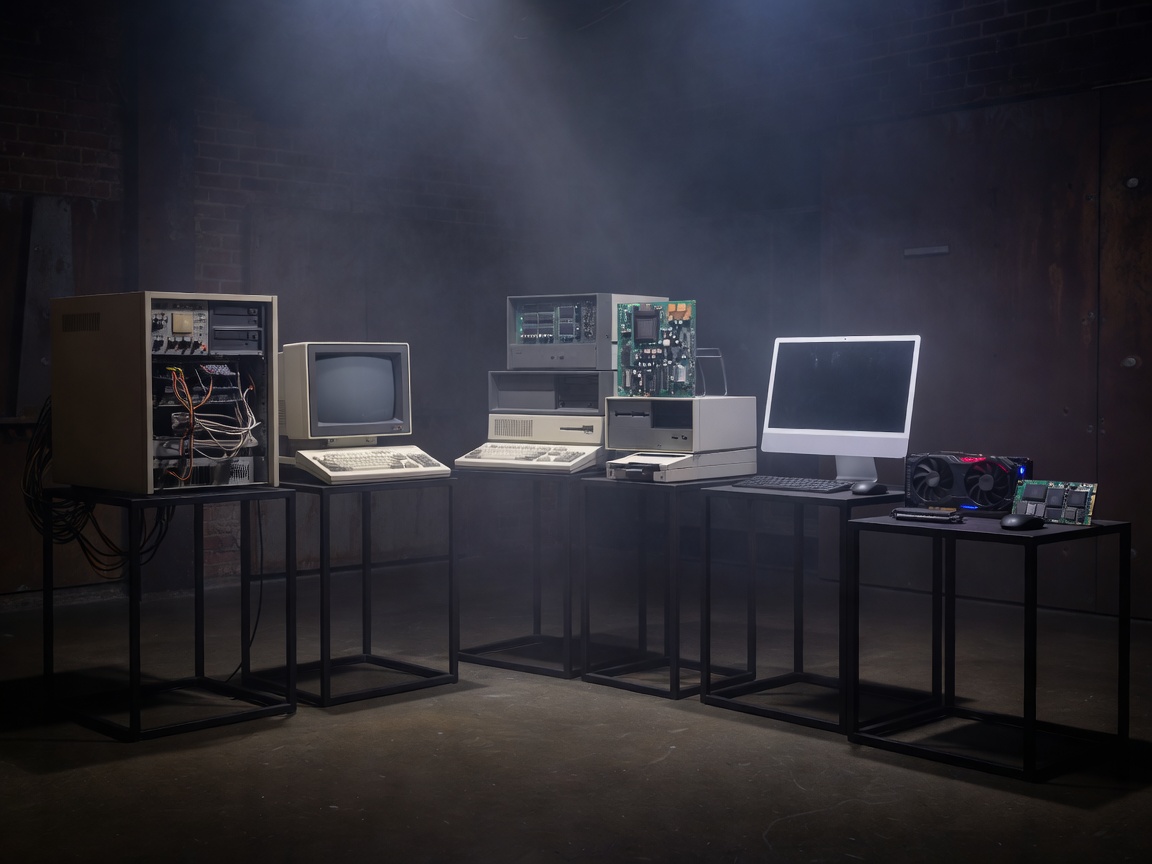
Four decades of silicon, storage and controllers, from a 1.79 MHz processor to machines with custom SSDs and hardware ray tracing.
Below are headline specifications for major home consoles and hybrids, with North American launch years. Prices are original US launch prices for the base model, not adjusted for inflation; a dash means we have not listed one.
| System | NA launch | Processor | Memory | US launch price |
|---|---|---|---|---|
| NES | 1985 | Ricoh 2A03, ~1.79 MHz | 2 KB work RAM | — |
| Super NES | 1991 | Ricoh 5A22, up to 3.58 MHz | 128 KB | $199 |
| PlayStation | 1995 | MIPS R3000A, 33.9 MHz | 2 MB main | $299 |
| Nintendo 64 | 1996 | NEC VR4300, 93.75 MHz | 4 MB (8 MB with Expansion Pak) | $199 |
| PlayStation 2 | 2000 | Emotion Engine, ~294 MHz | 32 MB | $299 |
| Xbox | 2001 | Pentium III-based, 733 MHz | 64 MB | $299 |
| GameCube | 2001 | IBM Gekko, 485 MHz | 24 MB main + 16 MB auxiliary | $199 |
| Xbox 360 | 2005 | Xenon tri-core, 3.2 GHz | 512 MB | $299 / $399 |
| PlayStation 3 | 2006 | Cell, 3.2 GHz | 256 MB + 256 MB video | $499 / $599 |
| Wii | 2006 | IBM Broadway, 729 MHz | 88 MB | $249.99 |
| PlayStation 4 | 2013 | 8-core AMD Jaguar, 1.6 GHz | 8 GB GDDR5 | $399 |
| Xbox One | 2013 | 8-core AMD Jaguar, 1.75 GHz | 8 GB DDR3 | $499 |
| Nintendo Switch | 2017 | Custom Nvidia Tegra X1 | 4 GB | $299.99 |
| PlayStation 5 | 2020 | 8-core AMD Zen 2, up to 3.5 GHz | 16 GB GDDR6 | $499.99 / $399.99 Digital |
| Xbox Series X|S | 2020 | 8-core AMD Zen 2, up to 3.8 GHz (X) | 16 GB (X) / 10 GB (S) | $499 / $299 |
| Nintendo Switch 2 | 2025 | Custom Nvidia processor | 12 GB | $449.99 |
Clock speed is only comparable within the same processor family. A 3.2 GHz chip from 2006 does far less work per cycle than a modern design, and graphics performance depends on the GPU, memory bandwidth and software as much as the CPU. Teraflop figures, popular in marketing since the PS4 and Xbox One era, measure theoretical GPU throughput rather than real frame rates. Architecture also matters for developers: the PS3's Cell processor was powerful but notoriously hard to program, while the PS4 and Xbox One moved to PC-like x86 designs that made cross-platform development simpler.
Nintendo's Game & Watch popularised the cross-shaped D-pad, later carried over to the NES. The SNES added shoulder buttons. The Nintendo 64 made the analog stick standard, and its Rumble Pak brought force feedback. Sony's DualShock established the twin-stick layout still used today. The Wii Remote (2006) introduced motion pointing to a mass audience, while the Switch's detachable Joy-Con made a controller you can split between two players. The PS5's DualSense added adaptive triggers and precise haptics, and Switch 2's Joy-Con 2 can work like a computer mouse.
Ten handhelds that each changed what portable play could mean. Years are first launch worldwide.
Single-game LCD devices; later models introduced the cross D-pad.
Monochrome screen and long battery life beat flashier colour rivals.
A horizontal layout and roughly SNES-class 2D power in your pocket.
Two screens, one touch-sensitive, and wide appeal beyond core players.
Near-console 3D visuals and media playback on a widescreen display.
Stereoscopic 3D without glasses, plus StreetPass social features.
OLED screen on the original model, dual analog sticks and a rear touchpad.
Docks to a TV or plays in the hand, merging home and portable libraries.
A handheld PC running SteamOS, playing much of an existing Steam library.
A larger 1080p screen, magnetic Joy-Con 2 and support for most Switch games.
Today's choice is between console hybrids with curated libraries and PC handhelds that run existing computer games.
Weigh up the two biggest platforms side by side.
Console vs PC